Who Is Speaking, and How Would They Know?
Assess a source by asking how it knows: distinguish direct observation, specialist knowledge, and repeated accounts before deciding what to trust.
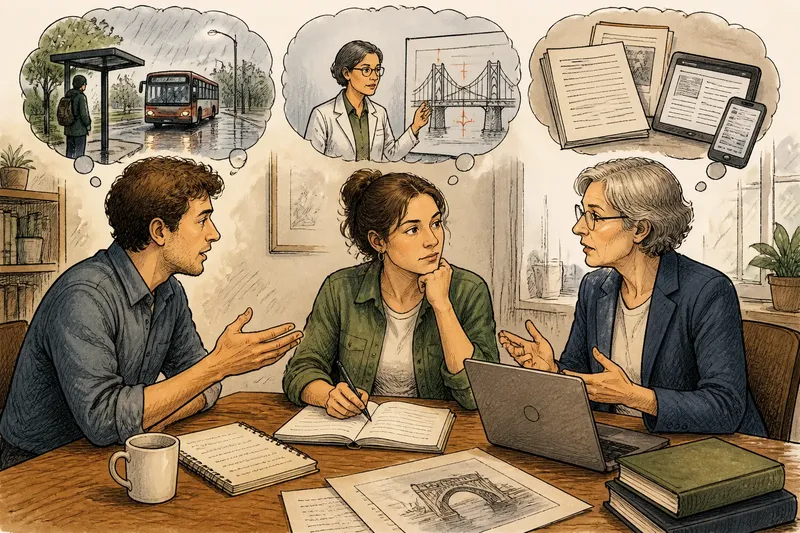
To assess a source, ask how it knows what it says, not simply whether it sounds confident. A person who witnessed an event, a specialist explaining a technical mechanism, and someone repeating another person’s account may all describe the same subject, but they can support different kinds of conclusions.
This distinction is useful when a claim reaches you through a news report, a neighborhood message, an expert interview, or a friend’s retelling. Instead of sorting speakers into “reliable” and “unreliable” too quickly, match the speaker’s access to the particular point you want to establish.
Direct observation supports what a person could actually perceive
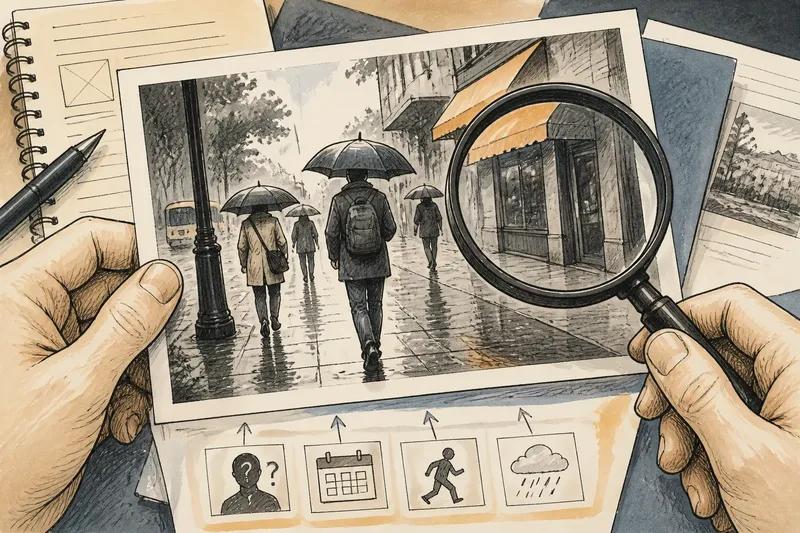
A firsthand observer can often speak to what they saw, heard, or did. A commuter who watched a bus stop running can describe the empty stop and the time they waited. A shop worker who heard a loud argument can describe its volume and where it came from. Those observations matter, but they do not automatically establish why the bus stopped or what the argument was about.
Perception has boundaries. People see only from where they stand, hear only what carries to them, and remember events through the details that seemed important at the time. A witness may be entirely sincere and still miss a brief exchange, mistake a distant object, or be unable to tell what happened before arriving.
When a source says, “I saw it myself,” separate the observation from the interpretation. Ask what was visible, how close the person was, what they could not see, and whether the account is being offered as one person’s experience or as a complete explanation. The answer may be strong for a narrow point and weak for a larger claim.
Specialist knowledge supports explanation within a defined field
A specialist may understand a subject without having witnessed a particular event. A civil engineer can explain how a bridge component carries weight; that knowledge does not by itself establish what happened at a particular bridge on a particular afternoon. A physician can describe how a symptom is commonly evaluated, while a specific diagnosis depends on information about the individual patient.
Expertise is most useful when the question calls for methods, context, or technical interpretation. The relevant question is not just whether a person has an impressive title, but whether their training and work connect to the exact subject. Someone knowledgeable about climate patterns may not be qualified to interpret a local zoning rule. A software security professional may understand vulnerabilities but have no direct access to a company’s internal incident records.
Look for the boundary the specialist acknowledges. A careful explanation distinguishes what a field can infer from what remains unknown, and names the evidence needed to narrow the gap. Confidence alone is not a substitute for a clear connection between expertise and claim.
Secondhand repetition carries a chain that needs tracing
A secondhand account comes through another person, document, or publication rather than through the speaker’s own observation. That does not make it false. Many consequential facts are transmitted through records and reporting. But each transfer creates a chance for context to be shortened, uncertainty to disappear, or a tentative statement to become definite.
“A colleague told me” is different from “I read the original inspection report,” which is different again from “Several posts say.” Each phrase describes a different route to the information. A source may have accurately repeated what someone said while still being unable to confirm that the underlying statement was accurate.
Trace the account toward its earliest identifiable source. If an article cites a public document, inspect the relevant passage rather than relying only on a paraphrase. If a post attributes a claim to a named witness, look for the witness’s own account and note whether it includes qualifications. If the trail ends in repeated anonymous references, treat the claim as unverified rather than silently upgrading its status.
Choose the source that fits the question you have
The same subject can call for different kinds of access. If you want to know what a person experienced, their own account may be the right starting point. If you want to know what a technical term means, a relevant specialist may be better placed to explain it. If you want to know whether an event occurred, you may need records or multiple independent accounts rather than one vivid recollection.
Consider what your question actually asks:
- What did this person see or hear? Prefer a direct account, while checking the observer’s location, timing, and limits.
- How does this process work? Look for a specialist whose field matches the process and whose explanation separates general principles from a claim about one case.
- What happened when nobody I can contact witnessed it? Seek records, contemporaneous reporting, or several accounts with identifiable origins.
- Is this quotation accurate? Find the original recording, transcript, letter, or full statement, then compare the wording and surrounding context.
- Is this account being repeated from a single source? Follow citations and links until you reach the origin or can see where the trail stops.
These are not rankings that place one kind of source above all others. An eyewitness may be best for a small, observable detail and poorly positioned to explain its cause. An expert may explain a general mechanism while lacking direct evidence about a named incident. A well-documented secondhand report can carry more useful information than a vague firsthand assertion, because its source and limits are visible.
Keep observation, interpretation, and transmission distinct
Useful source assessment often comes down to labeling three layers. Observation is what the source directly encountered. Interpretation is the meaning they assign to it. Transmission is how the account traveled to you. A speaker can be close to one layer and distant from another.
Say you receive a message from a resident who says a water main broke near the library, making the sidewalk wet. The resident’s direct observation may support that the pavement was wet and that water was flowing. Their belief that a main had broken is an interpretation unless they saw the break or learned its cause from someone in a position to know. If you hear the account from a neighbor who heard it from the resident, the added retelling makes the source chain another part of the question. You can describe the report as a resident’s account without presenting the cause as confirmed.
This habit also makes your own retelling more accurate. Preserve phrases such as “I saw,” “the report states,” or “a specialist explains” when they genuinely describe the route. Avoid changing “may have caused” into “caused,” or turning an unnamed person’s report into a settled fact. The wording should reflect the source’s actual access, not the certainty you would like to have.
Small details reveal whether a source is inside its lane
Listen for the kind of detail the speaker can reasonably provide. A witness may describe the sequence they observed but not the motives of people involved. A technician may explain what a device records but not verify what happened in a room if no recording exists. A reporter who cites a document can tell you what the document says, but a summary should not imply that the reporter personally witnessed the events it describes.
Also notice when a source marks uncertainty. “I could not hear the beginning,” “the record does not identify who made the decision,” and “this is a general explanation, not an assessment of that individual” are not defects. They help define the claim. By contrast, a source who moves from a limited observation to a sweeping explanation without showing the bridge between them deserves closer scrutiny.
It is not worth the effort to investigate every trivial statement as if it were a major public dispute. Spend more attention where a claim could affect a decision, damage someone’s reputation, or shape how a community understands an event. For low-stakes conversation, a simple “that’s what I heard” can be enough to keep a report in proportion.
Which kind of source fits your situation?
Can an eyewitness tell me why something happened?
An eyewitness can describe what they perceived, but the cause may require evidence beyond the scene they observed. Treat a causal explanation as an interpretation unless the witness also had access to the relevant records, actions, or conversation.
Should I trust an expert who was not present?
An expert can explain what their field makes plausible and what evidence would matter. Their expertise does not establish the details of an event they did not observe, so keep the technical explanation separate from event-specific claims.
What if every account points back to one person?
Several repetitions do not become independent confirmation if they all rely on the same original account. Follow the citations, identify the common source, and describe the claim as originating there unless another source contributes independent evidence.
How should I describe an account I cannot verify?
State who is making the claim and how they appear to know it, then preserve any uncertainty. “A resident said they saw water on the sidewalk” is more precise than “a water main broke” when the cause remains unclear.
Match your confidence to the source’s access
A source is not useful in the abstract; it is useful for a particular question. Direct observation, specialist knowledge, and secondhand repetition each offer a different route to information, with different limits. The practical task is to keep those routes visible and avoid asking one kind of access to do another kind’s work.
When you assess a source, make the main search question concrete: who is speaking, and how would they know? Then identify whether the claim comes from direct perception, relevant expertise, a traceable record, or a chain of retellings. That small distinction lets you report what is known, what is inferred, and what still needs confirmation without dismissing a source or overstating its reach.
If the answer affects health, legal rights, or another consequential decision, use source assessment as a way to frame better questions, not as a substitute for advice from a qualified professional. Ask what information that professional needs and whether the source you have can actually provide it.